

Can You Bring Electric Luggage on a Plane? 2026 FAA & TSA Rules
Last reviewed: June 21, 2026
Short answer: Yes, you can often bring electric luggage on a plane when its lithium battery is removable, within the airline’s watt-hour limit, and carried in the cabin. If the suitcase is checked or gate-checked, remove the battery first. Your airline can apply stricter rules, so confirm before every trip.
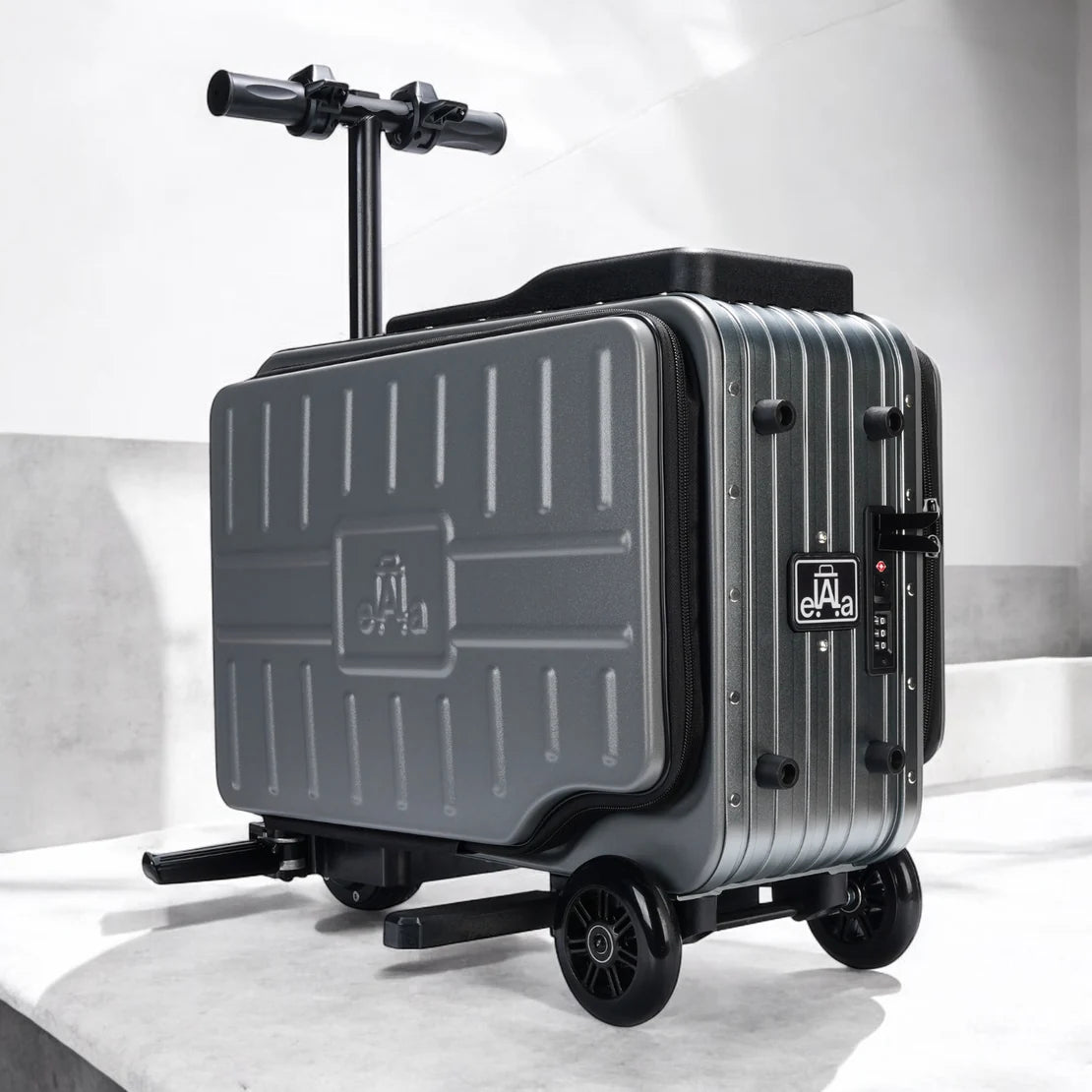
That answer sounds simple, but three different questions are often bundled together: Can the battery fly? Can the suitcase be carried on or checked? Can you ride it inside the airport? Here is how to separate the rules and travel with an ELALA rideable suitcase more confidently.
A traveler-first guide, not a fabricated hands-on review
This guide was prepared by the ELALA editorial team for U.S. travelers who want a practical airport checklist. It combines current FAA guidance with ELALA’s published product specifications. It is not presented as an independent customer review or an undisclosed personal flight test. When ELALA publishes a first-person product experience, the article should identify the writer, relevant travel background, test period, route, airports, airline, luggage load, and any product supplied by the brand.
What the FAA rule says about electric luggage
The Federal Aviation Administration (FAA) treats motorized and smart luggage as baggage equipped with a lithium battery. Its current guidance says this baggage must travel as carry-on baggage unless the battery is removed. A removed battery then follows the rules for a spare lithium battery.
For ordinary spare rechargeable lithium-ion batteries, the FAA sets a size limit of 100 watt-hours (Wh) per battery. Spare batteries must stay in carry-on baggage, and their terminals must be protected from short circuit. Airlines may adopt stricter quantity or watt-hour limits.
Practical takeaway: A removable battery below 100Wh is the travel-friendly setup, but it is not a universal guarantee of acceptance. The suitcase still has to meet your airline’s size, weight, and baggage rules.

FAA rules, TSA screening, and airline policy are not the same thing
- FAA: Sets U.S. aviation safety rules for transporting lithium batteries and battery-powered baggage.
- TSA: Screens passengers and property at the security checkpoint. TSA screening does not replace FAA battery rules or airline baggage policies.
- Your airline: Decides whether the suitcase meets its carry-on or checked-bag limits and may impose stricter battery restrictions.
- The airport: Controls where riding is permitted inside the terminal. Posted rules and staff instructions always apply.
This is why the phrase “TSA-approved electric luggage” can be misleading. There is no blanket approval that overrides an airline’s baggage policy, a gate agent’s decision, or an airport’s rules about riding in the terminal.
How to take an electric suitcase on a plane
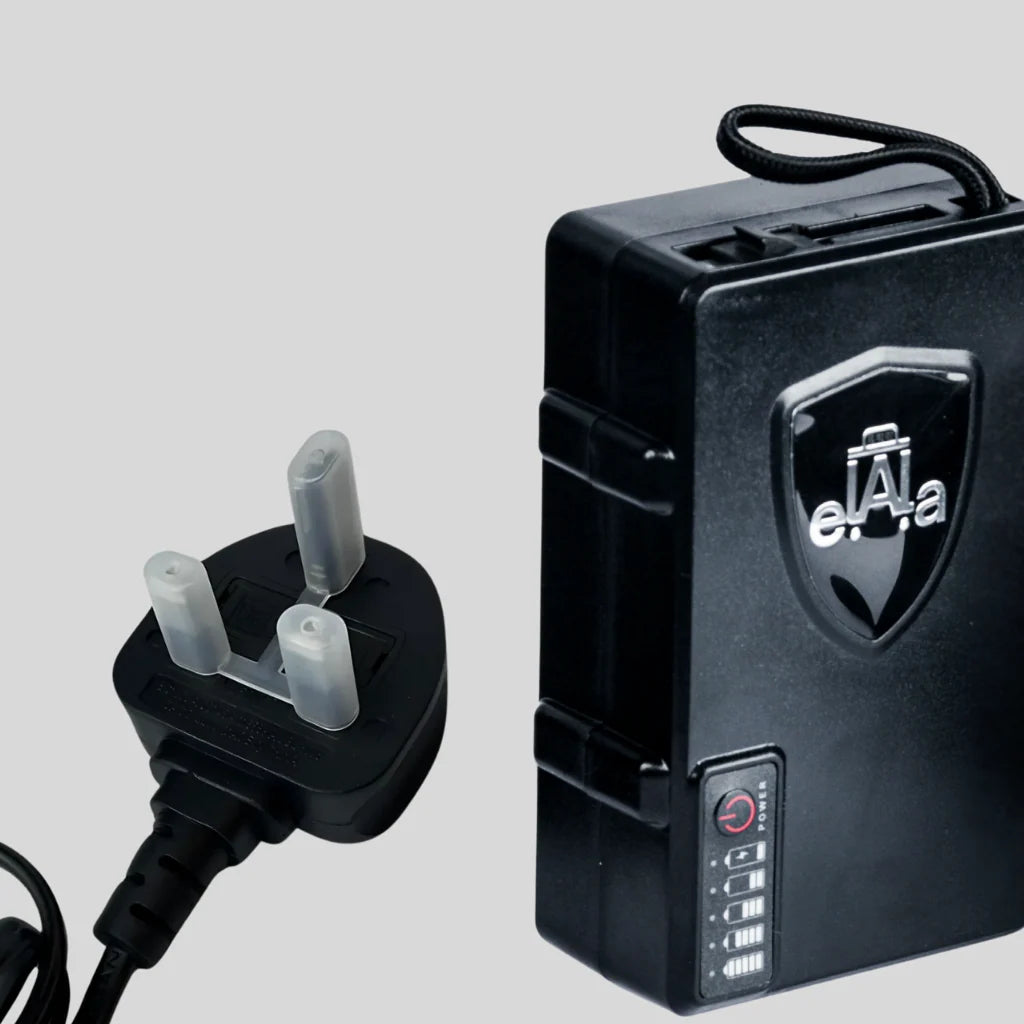
- Find the watt-hour rating. Look for “Wh” on the battery label. ELALA’s current removable battery is rated at 96.2Wh.
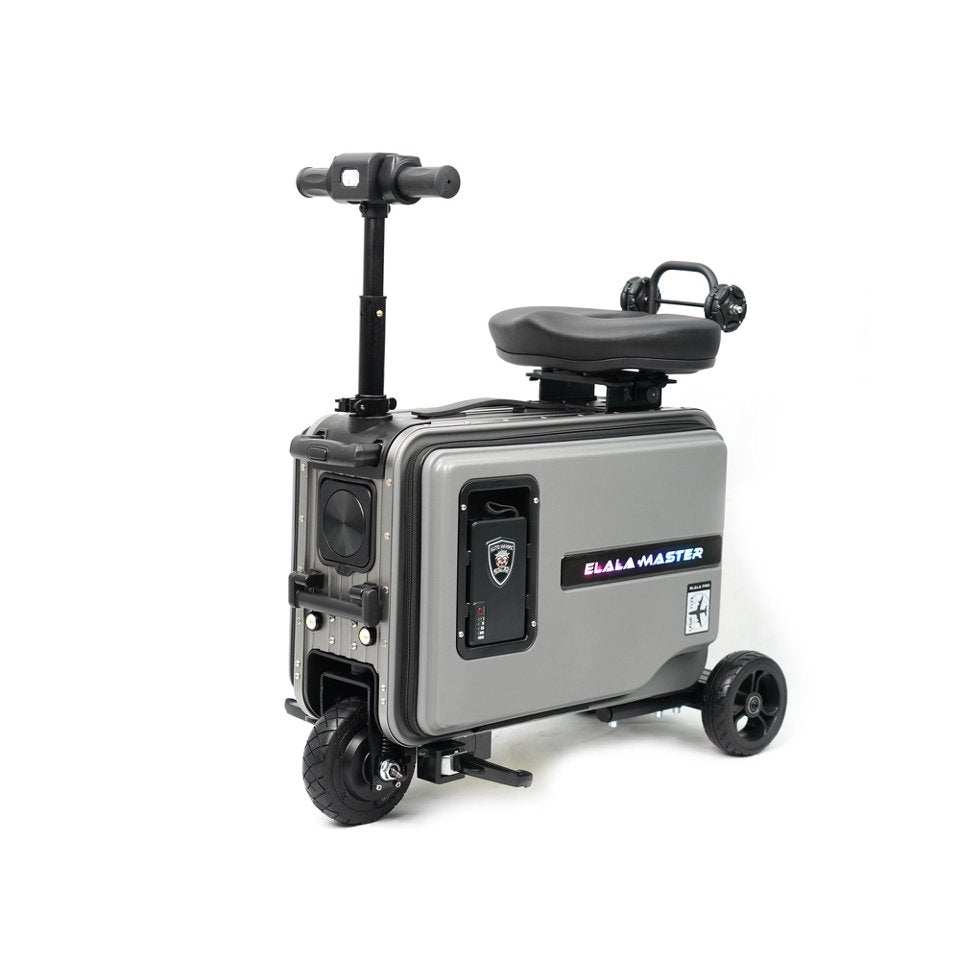
- Confirm the battery removes easily. Practice removing and reinstalling it before leaving home.
- Check the airline’s current rules. Review both lithium-battery restrictions and carry-on dimensions for the exact flight.
- Protect the battery terminals. Use its protective case, retail packaging, a battery sleeve, or another method that prevents contact with metal.
- Keep a removable battery in the cabin. Do not leave it inside luggage that will be checked or gate-checked.
- At security, follow the officer’s instructions. Be ready to remove the battery for separate screening if requested.
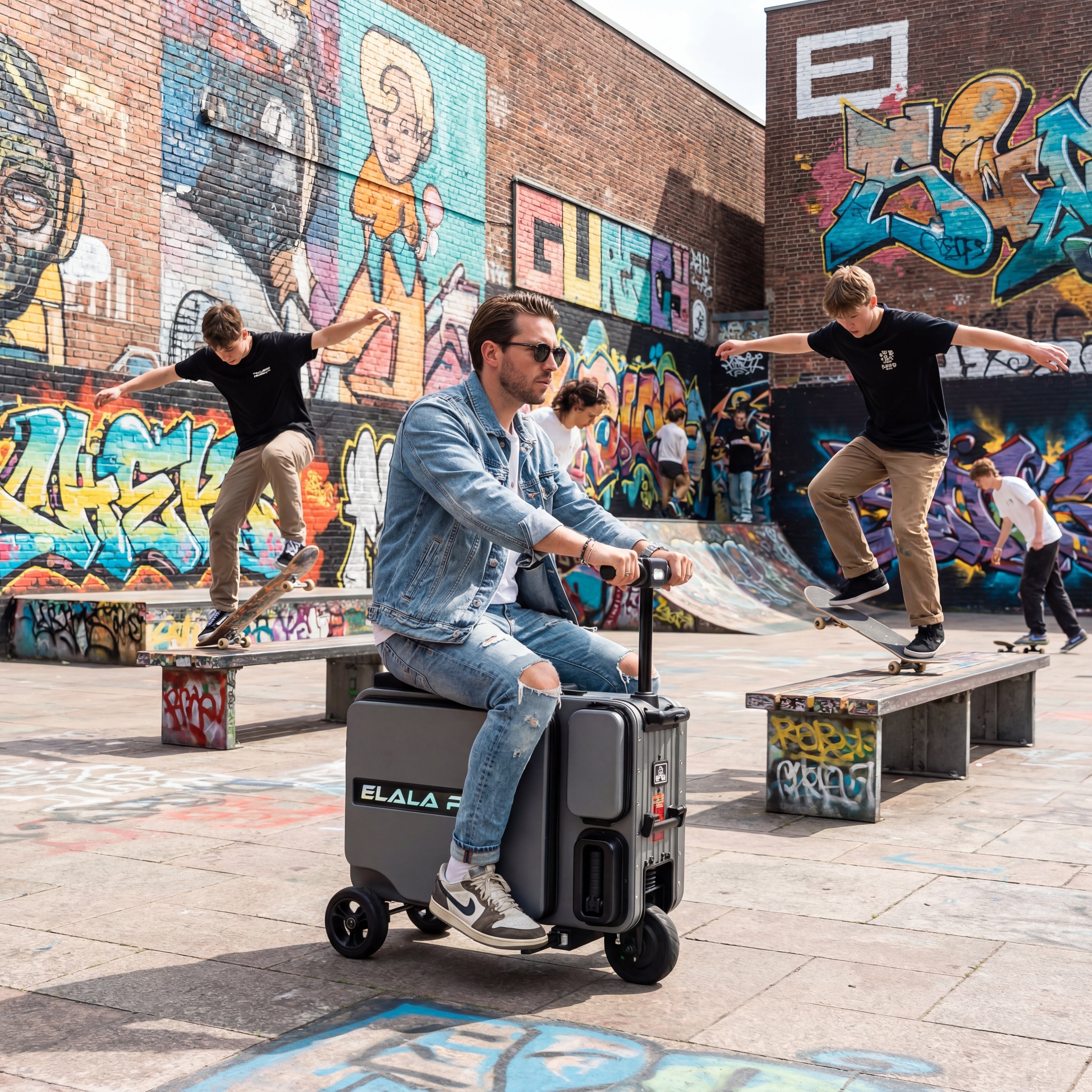
- Ride only where permitted. Slow down in crowded areas and dismount whenever signs or airport staff require it.

What happens if your electric luggage is gate-checked?
A carry-on can still be gate-checked when overhead bins are full or the aircraft is small. Before the suitcase leaves your possession, remove the lithium battery and keep it with you in the cabin. The FAA specifically says spare batteries must be removed from a carry-on that is checked at the gate or planeside.
Build this step into your boarding routine. Store the battery where you can reach it without unpacking the entire suitcase.
Which ELALA electric suitcase fits your travel style?
All four current ELALA rideable suitcases use the same 96.2Wh removable battery, but their luggage size and riding features differ. Always compare the external dimensions with your airline’s current allowance.
| Model | Best fit | Current listed size | Capacity / weight | Listed top speed |
|---|---|---|---|---|
| ELALA Master | Maximum performance and two-rider capability | 24.5 × 11.1 × 23.3 in | 40L / 23 lb | Up to 16 mph |
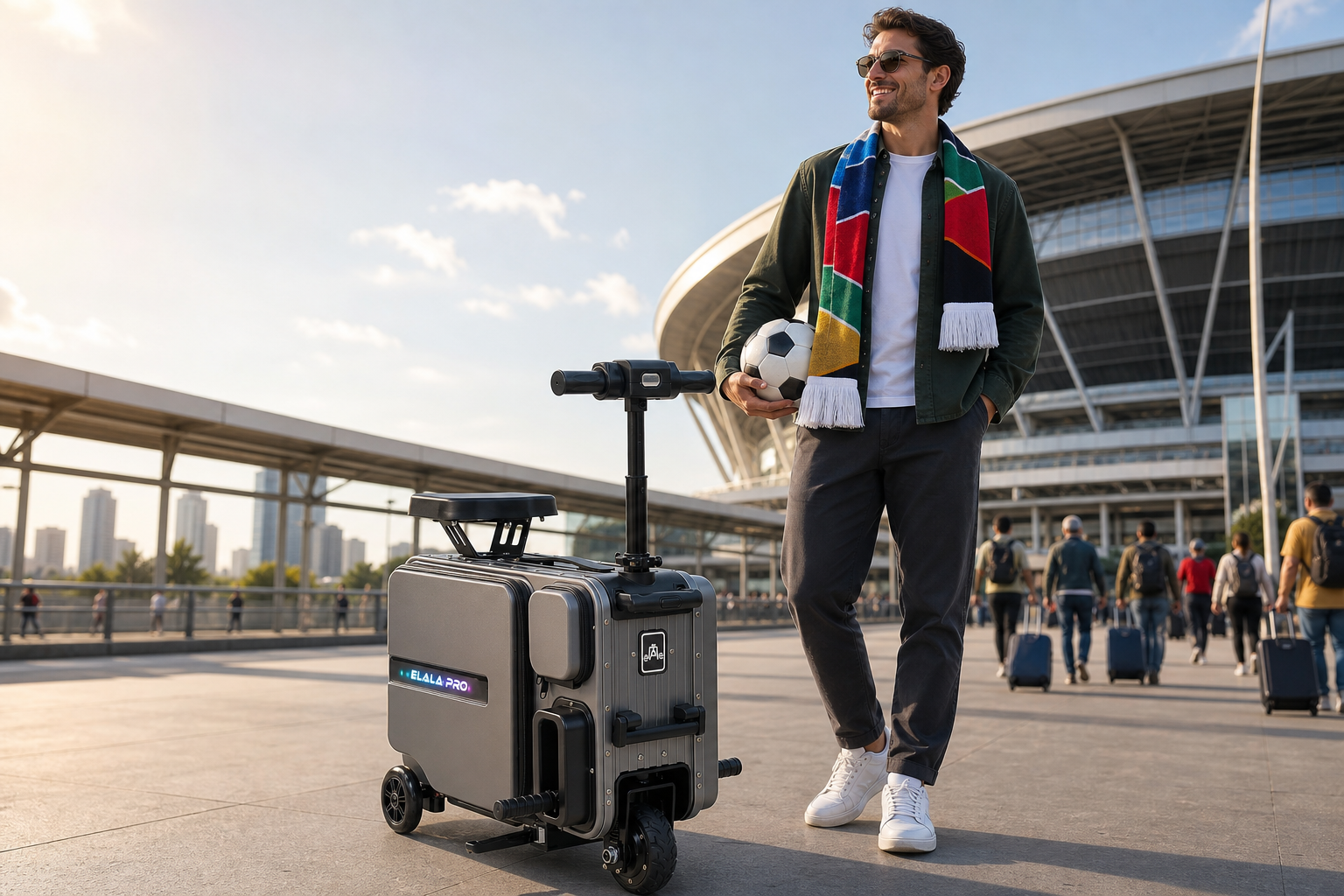
| ELALA Pro | A smoother ride with dual suspension | 21.3 × 9.1 × 20.5 in | 32L / 20 lb | Up to 11 mph |
| ELALA Lite | Lower suitcase weight and 40L capacity | 21.3 × 9.8 × 20.1 in | 40L / 18 lb | Up to 11 mph |
| ELALA P28 | Checked-size packing for cruises, resorts, and longer trips | 27.3 × 10.9 × 22.6 in | 70L / 26 lb | Up to 13 mph |

The ELALA 96.2Wh removable battery is compatible with the Master, Pro, Lite, and P28. When carried as a spare, keep it in the cabin and protect it from damage and short circuit.
Carry-on size is a separate decision
A battery can comply with the FAA size limit while the suitcase is still too large for a particular airline, aircraft, route, or fare. Measure the complete suitcase and compare all three dimensions with the operating carrier’s rules. Pay special attention to regional aircraft, basic-economy restrictions, and international segments operated by partner airlines.
The ELALA P28 is a checked-size model. Remove its battery before check-in and carry the battery in the cabin. For ELALA Master, Pro, and Lite, verify the current dimensions against your airline instead of relying on a general “carry-on” label.
Frequently asked questions
Can you bring electric luggage on a plane?
Usually, yes, if the lithium battery is removable, within the permitted watt-hour limit, and carried in the cabin. The airline must also accept the suitcase’s size and weight.
Can an electric suitcase go in checked baggage?
The suitcase can often be checked after its removable lithium battery is taken out. The removed battery must stay with the passenger in the aircraft cabin and be protected from short circuit.
Is a 96.2Wh battery allowed on a plane?
The FAA’s ordinary size limit for a spare rechargeable lithium-ion battery is 100Wh, so 96.2Wh is below that threshold. Airlines may still set stricter restrictions, so check the operating carrier before travel.
Does TSA approve electric suitcases?
TSA screening is only one part of the trip. Battery transport is governed by FAA rules, while the airline controls baggage acceptance. No “TSA-approved” marketing label guarantees acceptance on every flight.
Are rideable suitcases allowed inside airports?
Airport and terminal rules vary. Some locations may restrict riding in crowded areas or prohibit it entirely. Follow posted signs and staff instructions, ride at walking speed where allowed, and dismount when conditions are busy.
What should I do if my carry-on is gate-checked?
Remove the battery before handing over the suitcase and keep it in the cabin. Do not allow a spare lithium battery to travel in the cargo hold.
Travel smarter with a removable-battery setup
The best electric luggage for air travel is not defined by speed alone. A clearly labeled, removable battery; accessible release mechanism; suitable suitcase dimensions; and a traveler who checks the current policy are what make the airport experience smoother.
Compare the ELALA Master, ELALA Pro, ELALA Lite, and checked-size ELALA P28 to find the rideable suitcase that fits your route and packing style.
Official sources
This article is general travel information, not a guarantee of airline acceptance. Rules and enforcement can change. Confirm the policy with the operating airline and airport before departure.


Leave a comment
This site is protected by hCaptcha and the hCaptcha Privacy Policy and Terms of Service apply.