

Best Luggage for Solo Travel in 2026: What to Look For
Last reviewed: July 5, 2026
The best luggage for solo travel is the bag you can control with one hand, lift when required, and manage through every transfer. Prioritize route-appropriate dimensions, manageable total weight, secure organization, and a plan for gate-checks. If long terminal walks are the main problem, removable-battery rideable luggage can be useful where airport and airline policies permit it.
Why solo travel changes the luggage decision
When traveling alone, there is no second person to watch a bag while you buy food, hold a document while you move through a checkpoint, or take over during a long connection. Your luggage has to work with your actual route and with the number of hands you have available.
That matters in 2026. Google’s current summer-travel report says search interest in “solo travel” reached an all-time high, while “women solo travel” reached a 15-year high. The useful response is not to buy the biggest or most feature-heavy suitcase. It is to choose the simplest system you can manage consistently from curb to gate, hotel, train, and return flight.
Start with the trip, not the suitcase
Before comparing products, write down the parts of the trip that create friction:
- Flight type: nonstop, connecting, regional, domestic, or international.
- Ground transfers: rideshare, train, bus, stairs, cobblestones, or long airport corridors.
- Trip length: a two-night work trip has different packing needs from a two-week city itinerary.
- Physical handling: how often you may need to lift the bag into a vehicle, onto a scale, or into storage.
- Gate-check risk: whether a full flight or smaller aircraft could send the bag below the cabin.
- Airline rules: complete external dimensions, weight, battery policy, and any restriction on rideable luggage.
A bag that is easy in one large U.S. hub may be awkward on a rail platform or unacceptable on a different airline. “Carry-on” is a product category, not a guarantee. The operating carrier makes the final baggage decision.
Carry-on, backpack, or rideable luggage?
| Type | Best fit | Main tradeoff for solo travelers |
|---|---|---|
| Spinner carry-on | Hotels, smooth floors, organized business travel | Easy to roll, but one hand stays occupied and small wheels can struggle on uneven surfaces. |
| Travel backpack | Stairs, public transit, walking-heavy city trips | Keeps both hands free, but the full load stays on your shoulders and back. |
| Soft-sided roller | Flexible packing and frequent access | Often practical and light, though shell protection and structure vary. |
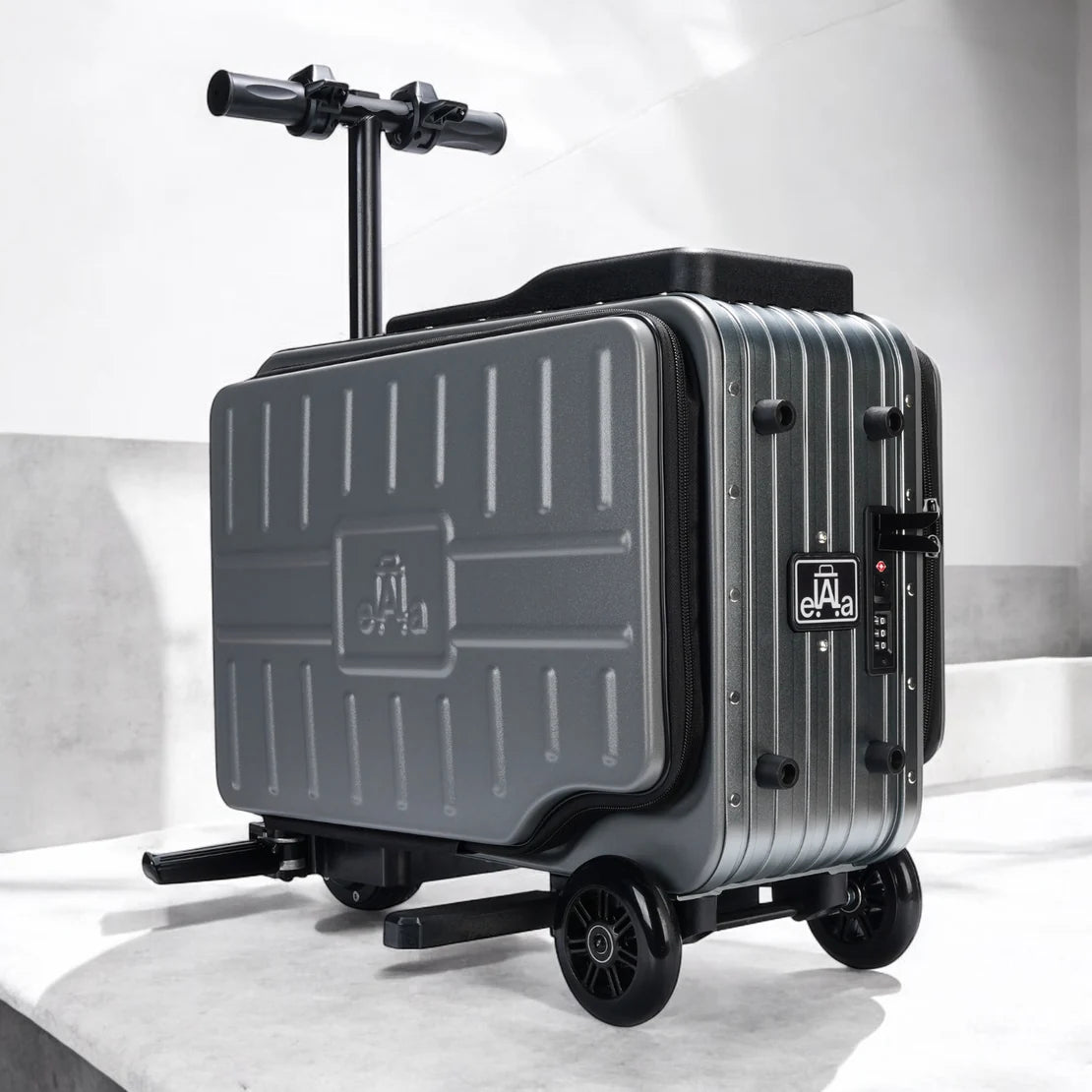
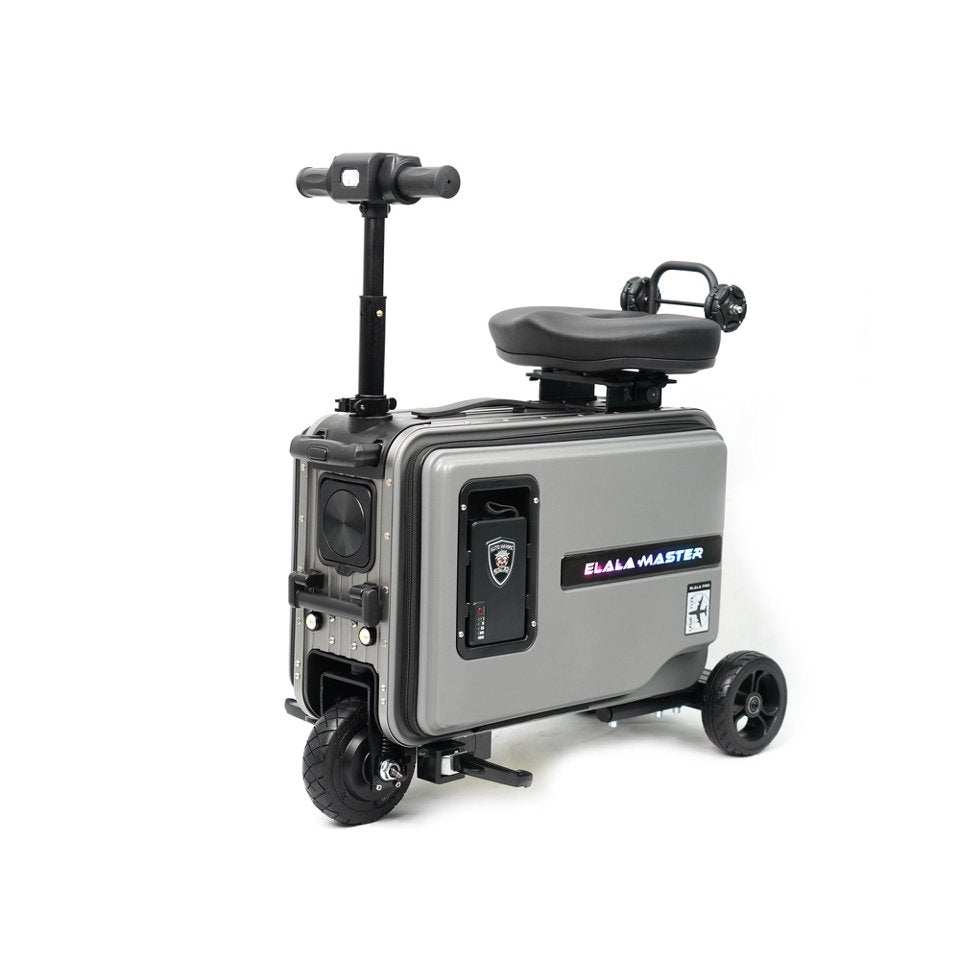
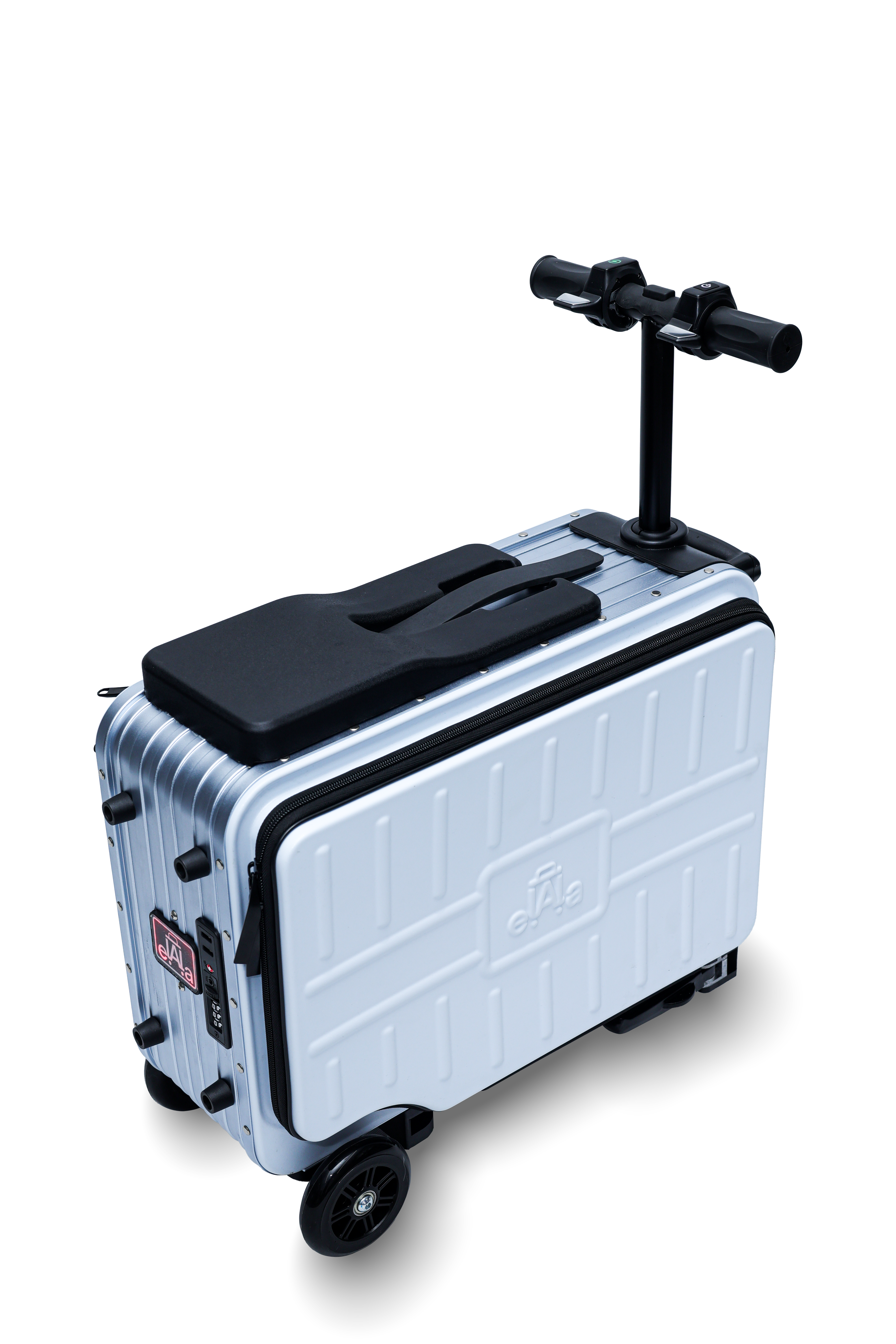
| Rideable electric luggage | Long airport walks and terminal-heavy itineraries where use is permitted | Adds powered mobility, but battery handling, product weight, airport conduct, and airline acceptance require planning. |
| Checked suitcase | Long stays, special equipment, or bulky packing | More capacity, but baggage claim, delays, and lifting are harder to manage alone. |
Many solo travelers will still prefer a backpack or conventional carry-on. A rideable suitcase is a more specific tool: it is most relevant when terminal distance is a recurring problem and the traveler is willing to manage the battery and local rules.
Six features that matter more when you travel alone
1. One-hand control
Test the whole travel system, not the suitcase by itself. You may also have a phone, passport, coffee, jacket, or personal item. Wide handles, predictable steering, and a personal item that attaches securely reduce juggling at checkpoints and elevators.
2. Manageable total weight
Empty weight matters, but packed weight matters more. Add clothing, shoes, electronics, toiletries, and souvenirs before deciding what you can comfortably lift. Powered luggage is heavier than a basic carry-on, so compare the mobility benefit with every point where lifting may be required.
3. A stable shape and secure organization
Choose a bag that stays balanced when stopped and keeps essentials accessible without opening the entire compartment. Place medication, identification, charging cables, and one emergency clothing layer in a personal item that remains with you.

4. Realistic capacity
Capacity is useful only if the packed bag still meets the airline’s limits and remains manageable. Build a small capsule wardrobe, use shoes that serve more than one purpose, and leave expansion space for the return trip.
5. A gate-check plan
Keep documents, medication, valuables, and any removable lithium battery where you can reach them before boarding. If a suitcase must be gate-checked, you should be able to remove required items without unpacking in the boarding lane.
6. A fallback mode
Smart features should never be the only way to move your belongings. Rideable luggage should also function as ordinary rolling luggage when riding is prohibited, the area is crowded, or the battery is removed.
Where ELALA Lite may fit
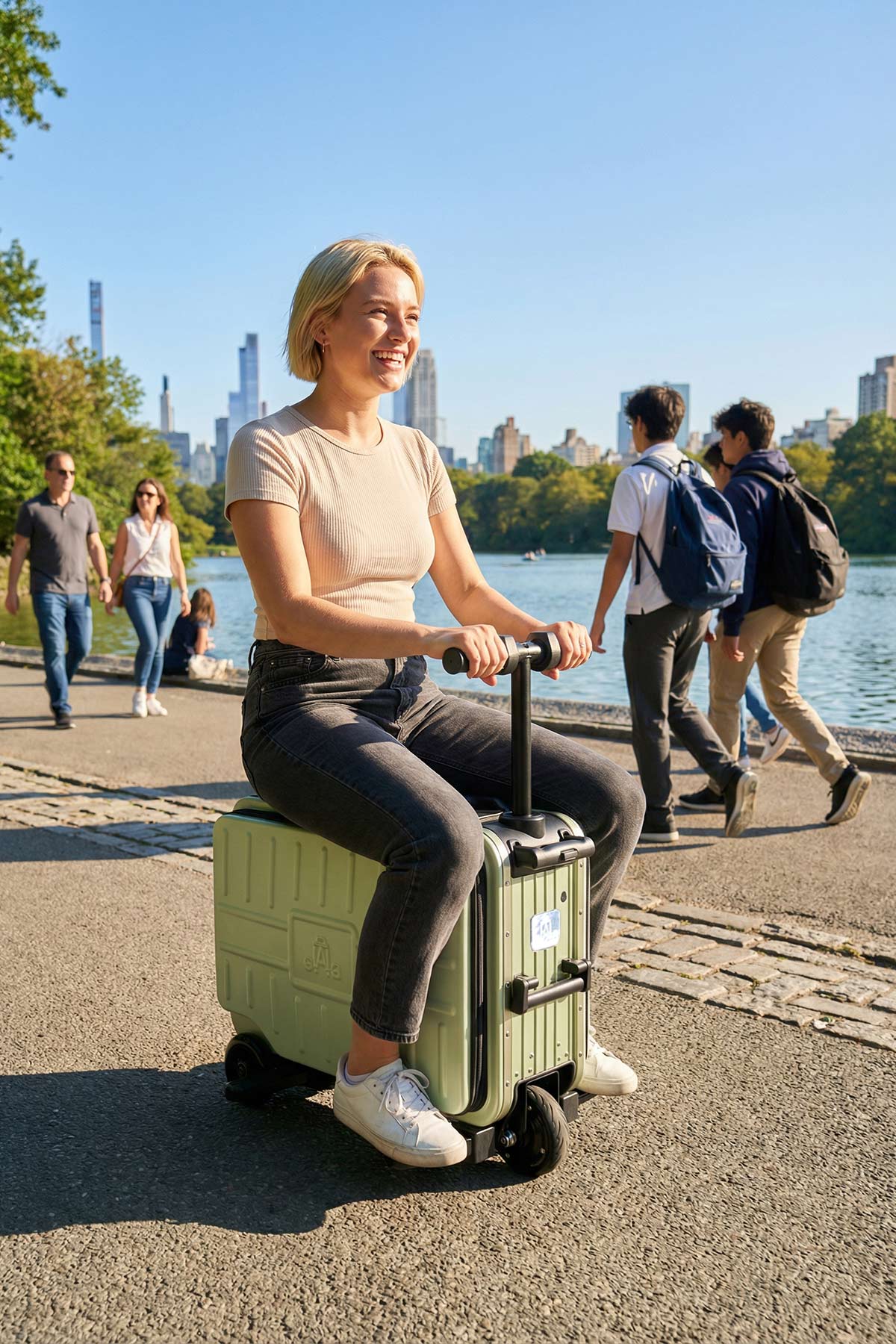
ELALA Lite is the most relevant ELALA model for a solo traveler who prioritizes lower suitcase weight and packing capacity. ELALA’s current public Lite page lists the model at 18 pounds, shows a 40L capacity feature badge, and describes detachable-battery travel guidance in its FAQ. ELALA also notes that speed and range vary by weight, surface, temperature, battery, and riding style.
Those product details do not make it the right choice for every route. Before buying, compare the listed size, current variant details, and packed weight with every operating airline on the itinerary. Also check whether each airport and airline permits rideable luggage. Do not describe a product as universally “airline approved” or assume that one successful trip predicts another carrier’s decision.
Battery rules to plan before the airport
The FAA classifies smart bags broadly enough to include baggage with lithium batteries used to power motors. Its current PackSafe guidance says lithium-battery baggage must travel as carry-on unless the battery is removed. A removed battery must follow the rules for spare batteries.
For a solo traveler, that creates a simple pre-flight routine:
- Confirm that the battery’s watt-hour marking is readable.
- Check the operating airline’s current smart-luggage and spare-battery policy.
- Practice removing and reinstalling the battery before travel day.
- Protect the battery terminals from short circuit.
- Keep the removed battery in the cabin, not in checked baggage.
- Remove the battery before a suitcase is checked or gate-checked.
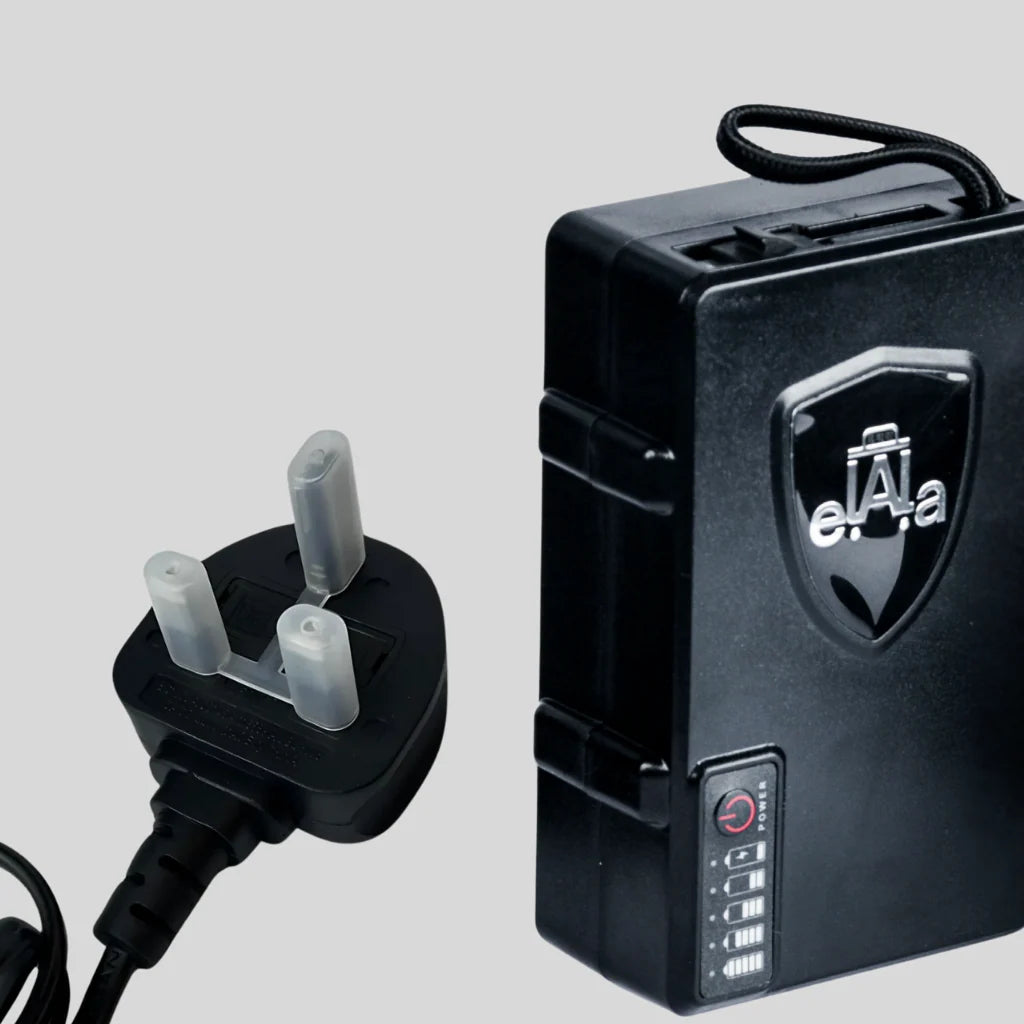
The current ELALA E-scooter battery accessory is described as a battery for keeping the scooter and phone charged on the go. Because the public battery page does not show a watt-hour rating in the visible product copy, rely on the watt-hour marking on the physical battery and the operating airline’s current policy before flying. Airlines may impose stricter conditions, so a product listing is not a universal approval.

For a focused policy explanation, read Can You Bring Electric Luggage on a Plane? 2026 FAA & TSA Rules.
Airport behavior matters as much as airline acceptance
Permission to transport a rideable suitcase on a flight is separate from permission to ride it inside an airport. Follow signs and staff instructions. Stay at a low speed, dismount near queues and security areas, yield to pedestrians, and use pull mode whenever the terminal is crowded.
A good solo-travel plan assumes that riding will sometimes be unavailable. The product still needs to work as luggage during security, boarding, elevators, shuttle transfers, and hotel check-in.
A practical packing system for one person
Use three access zones:
- On-body: phone, identification, payment card, and room key in a zippered crossbody or secure pocket.
- Personal item: medication, valuables, charger, removed battery, water bottle, and one emergency layer.
- Main suitcase: capsule wardrobe, spare shoes, toiletries, and items not needed until the hotel.
This arrangement keeps the most important items with you if the main bag is delayed or gate-checked. It also reduces the need to open the suitcase in public spaces.
Questions to ask before buying
- Can the packed bag meet the strictest airline limit on the itinerary?
- Can you lift the packed bag without assistance?
- Will the bag work on the trip’s least convenient surface?
- Can you reach documents, medication, and the removable battery quickly?
- Does the bag remain useful when riding or powered features are unavailable?
- Have you checked the operating airline rather than only the ticket seller?
Frequently asked questions
What size luggage is best for solo travel?
There is no universal size. For many short air trips, a carry-on plus a compact personal item limits baggage-claim time and keeps essentials close. The correct dimensions and weight come from the operating airline, and international or regional carriers may use different limits.
Is a backpack or suitcase better for solo travel?
A backpack is useful for stairs, trains, and uneven streets; a suitcase is easier on the body across smooth terminals and hotel corridors. Choose based on the hardest part of the route, not only the flight.
Is lightweight luggage always better?
Lower empty weight leaves more room for belongings and can make lifting easier. However, wheel quality, stability, structure, repairability, and how the bag handles when packed also matter.
Can solo travelers bring electric luggage on a plane?
Potentially, but airline acceptance is not universal. Confirm the airline’s current policy, ensure the battery is removable, and follow FAA and carrier requirements for cabin transport and gate-checks.
Can you ride a suitcase inside any airport?
No. Airport rules and on-site conditions control use. Follow posted signs and staff instructions, dismount in crowded areas, and be ready to use the suitcase in pull mode.
Is ELALA Lite a carry-on?
ELALA markets Lite for compact travel, but only the operating airline can accept a bag for a specific flight. Compare the complete external dimensions and packed weight with the airline’s current limits before departure.
Choose the system you can manage alone
The best luggage for solo travel is not the bag with the longest feature list. It is the system that stays controllable when a connection is tight, a terminal is crowded, or a gate agent changes the plan.
If long airport walks are the main constraint, compare the ELALA Lite rideable suitcase with a conventional carry-on and a travel backpack. Then verify the exact size, weight, battery, and rideable-luggage rules for every operating airline before purchase.


Leave a comment
This site is protected by hCaptcha and the hCaptcha Privacy Policy and Terms of Service apply.